

Electromagnetic spectrum operations explained: EMSO, JEMSO, and EMBM
How DoD runs electromagnetic spectrum operations: JP 3-85, the EMS superiority strategy, JEMSO cells, EMBM, service EW units, and GAO's...
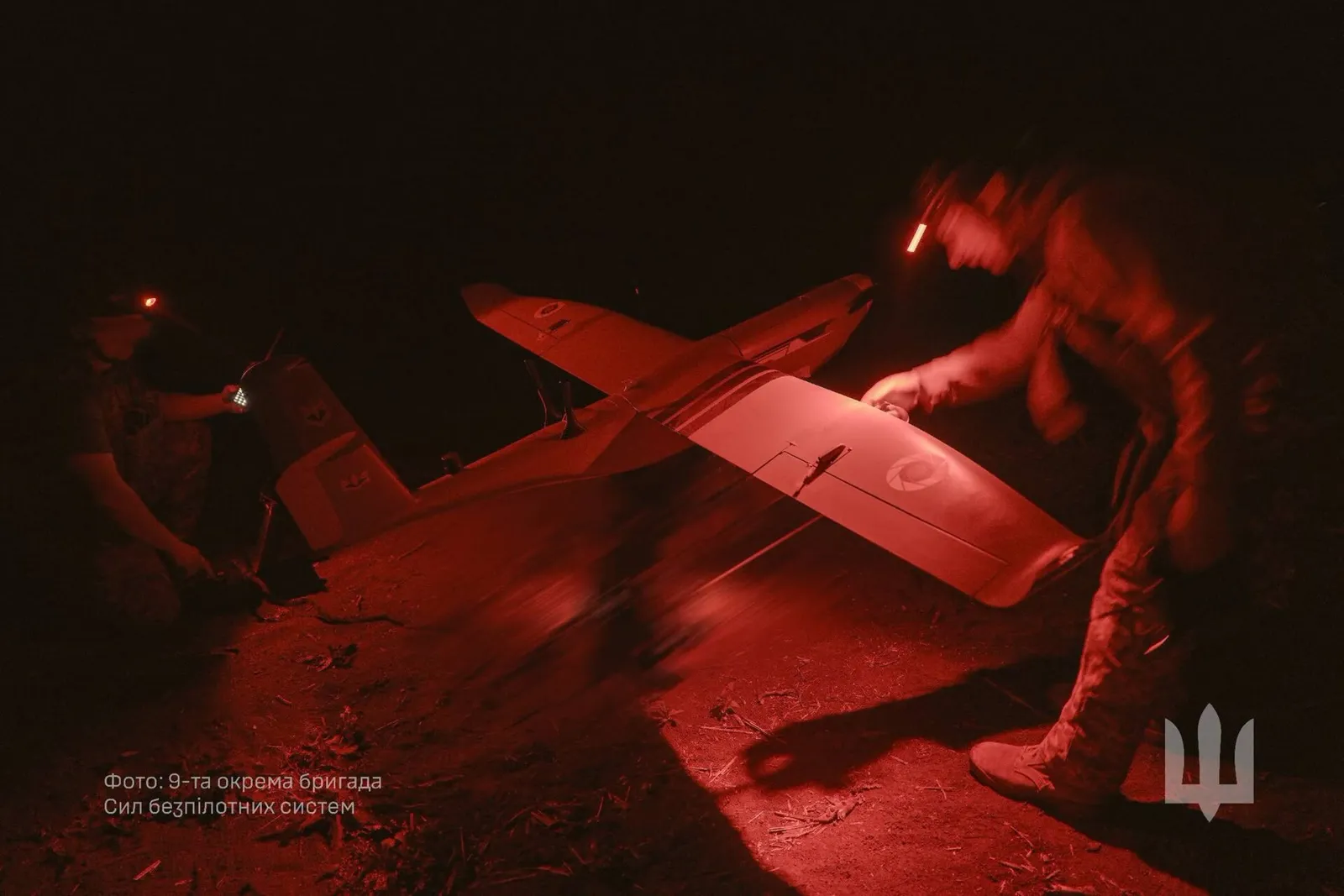
Photo: General Staff of the Armed Forces of Ukraine, CC BY 4.0, via Wikimedia Commons
The war in Ukraine is the largest sustained test of electromagnetic warfare since the Cold War ended, and it has run long enough to show patterns rather than anecdotes. Both armies jam, both armies listen, and both armies have learned that a radio, a drone link, or a GPS receiver is now a liability as well as a tool. The public record is uneven, but it is deep enough to draw practical conclusions.
This article pulls together what open sources actually report: the Royal United Services Institute (RUSI) field studies by Jack Watling and Nick Reynolds, U.S. and Ukrainian official statements, the Institute for the Study of War (ISW), and reputable defense and technology press. Where a claim rests on one source, leaked documents, or a vendor's own statement, that is flagged. Where reporting conflicts, both versions are given.
The goal is not to rank Russian equipment or to score the war. It is to pull out the lessons that matter to people who build, buy, and field U.S. systems: how dense the electromagnetic fight became, what it did to precision munitions, how fast each side adapted, and what that implies for dispersion, emission control, software updates, and acquisition speed.
U.S. joint doctrine now uses electromagnetic warfare (EW), with three divisions: electromagnetic attack (EA), electromagnetic support (ES), and electromagnetic protection (EP). Older publications use "electronic" for all three. The Congressional Research Service primer, for example, is still titled Defense Primer: Electronic Warfare, and it describes attack as using electromagnetic energy to degrade or deny an enemy's use of the spectrum, protection as preserving friendly access, and support as identifying and cataloging emissions. The functions did not change when the word did. This article uses the current terms throughout except when quoting a document title.
Three cautions apply to everything below.
Russian EW underperformed in the opening weeks of the full-scale invasion. Writing for IEEE Spectrum in 2022, Bryan Clark of the Hudson Institute noted that Ukrainian defenders around Kyiv "did not experience the jamming they faced in the Donbas." He offered several reasons: Russian aircraft that would have carried airborne jammers were largely grounded, line-of-sight drone control limited Russian reach, dense civilian communications around Kyiv made it hard to pick out military transmitters, and slow-moving columns could not easily set up large systems such as the Krasukha-4. Ukrainian forces even recovered Krasukha-4 components from an abandoned Russian command post near Kyiv in March 2022, which Clark described as giving NATO a look at "one of Russia's most sophisticated electronic warfare systems."
By June 2022, as the fight concentrated in the Donbas, that changed. Clark wrote that Russian forces could again "assume the detections are from Ukrainian military units and direct artillery and rocket fire against those locations." The front had become narrow and static enough for Russia's ground-based EW to work as designed.
The cost to Ukraine's early drone fleet was severe. Asia Times, summarizing RUSI's November 2022 study of the first months of the war, reported that about 90 percent of the drones Ukraine had amassed before the invasion were lost by summer, and that average life expectancy had fallen to about three flights for a small quadcopter and about six for a fixed-wing type. RUSI attributed most of those losses to Russian EW.
RUSI's May 2023 report Meatgrinder, based on field research with Ukrainian units, gave the most cited density figure of the war: Russian EW "remains potent, with an approximate distribution of at least one major system covering each 10 km of front." The same report put Ukrainian drone losses at "approximately 10,000 per month," a rate press coverage translated to more than 300 a day.
Three other points from that report deserve attention. First, the Russian systems were "heavily weighted towards the defeat of UAVs." Second, they "tend not to try and deconflict their effects," meaning Russian jammers were willing to degrade their own side's use of the spectrum to deny Ukraine's. Third, the authors reported that Russian EW was apparently "achieving real time interception and decryption" of the Motorola 256-bit encrypted tactical radios widely used by Ukrainian forces. That last claim is significant, sourced to Ukrainian accounts, and has not been independently demonstrated in public. It should be read as a reported operational concern rather than a confirmed technical break.
RUSI's September 2023 follow-up, Stormbreak, covering Ukraine's summer counteroffensive, identified a doctrinal shift: "the dispersal of electronic warfare systems rather than their concentration on major platforms." In other words, Russia moved from a model built around a few large, brigade-level jamming complexes toward many smaller emitters spread across the front.
By early 2024, Watling told the Financial Times, as republished by RUSI, that "the Russians have had a significant advantage in [EW] throughout the war, which has proved a sustained problem for Ukraine." A year later the balance was more even. RUSI's February 2025 report Tactical Developments During the Third Year of the Russo-Ukrainian War stated that "Ukrainian EW has matured and expanded over the course of the war" and that "navigational jamming is ubiquitous throughout the combat area. Jamming of command frequencies is also widespread."
The same report put hard numbers on what that saturation meant for first-person-view (FPV) attack drones. "Between 60 and 80% of Ukrainian FPVs fail to reach their target, depending on the part of the front and the skill of the operators," the authors wrote, and among those that do strike, "a majority fail to destroy the target system when striking armoured vehicles." Yet tactical drones still accounted for "60-70% of damaged and destroyed Russian systems." Both numbers are true at once. Electromagnetic attack does not stop drone warfare. It raises the number of drones needed per kill, which pushes both sides toward mass production.
The report also recorded the cost of all that jamming to the side doing it: EW "is causing widespread issues with deconfliction and fratricide." A dense jamming environment blinds friendly drones, friendly navigation, and friendly communications along with the enemy's.
Ukraine's own estimate of the opposing EW force, quoted by Nextgov in December 2023, was 18,000 to 20,000 Russian EW personnel. That figure came from Ukrainian officials and has not been independently confirmed.
Russia fields a family of named EW complexes, and photographs, captured equipment, and official statements have put many of them in Ukraine. What the public record supports is that these systems are present and what their designers and outside analysts say they are for. Detailed performance in Ukraine is mostly not public. The table below sticks to descriptions given in the cited sources.
| System | Publicly described role | What is reported about use in Ukraine |
|---|---|---|
| Krasukha-4 (1RL257) | Ground-based jammer aimed mainly at airborne and space-based fire control radars in the X- and Ku-bands (Clark, IEEE Spectrum) | Components captured near Kyiv in March 2022. Ukrainian StratCom claimed a strike on one in Zaporizhzhia in autumn 2023, which Militarnyi described as only the second Krasukha-4 recorded among Russian losses. Not independently verified. |
| Krasukha-2 | Targets S-band airborne search radars such as those on AWACS and JSTARS, often paired with Krasukha-4 (Clark) | No specific public reporting on its employment in Ukraine was found for this article. |
| Borisoglebsk-2 (RB-301B) | Detects and suppresses communication channels and radio emitters; mounted on MT-LB tracked vehicles, roughly 15 minutes to deploy (Kyiv Post) | Kyiv Post counted six destroyed and one captured and reused by Ukraine as of 2024. |
| Leer-3 (RB-341V) | Orlan-10 drones carrying payloads that suppress cellular networks and imitate base stations to locate phones (Clark; Kyiv Post) | Reported by The War Zone in 2022 as feeding cellphone detections to Russian artillery. Kyiv Post counted at least three destroyed. |
| Zhitel (R-330Zh) | Automated jammer that can reportedly deny GPS, satellite communications, and cellular networks across tens of kilometers (Clark) | Kyiv Post counted 13 destroyed since February 2022. |
| Pole-21 (R-340RP) | Satellite navigation jammer intended to defeat GPS-guided drones, cruise missiles, and bombs; reported effective range around 15 miles (Forbes, citing open sources) | One destroyed in late 2023 by what appeared to be a GPS-guided bomb. The Conflict Intelligence Team assessed it was not transmitting at the time. |
| Shipovnik-Aero | Counter-drone EW system | Named by RUSI as particularly effective; see below. |
Shipovnik-Aero is the clearest example of a system whose public reputation rests on one strong source. According to EurAsian Times, quoting the RUSI Meatgrinder study, it was "proving a particularly effective system because it has a low signature and can further obfuscate this by imitating other emitters and communications devices." In April 2024, Watling told a Wilson Center audience, as reported by USNI News, that near specialized counter-drone assets such as Shipovnik-Aero, the enemy's time to adapt to a new drone waveform drops to "typically around two weeks." Specific technical parameters of the system are not publicly confirmed.
The named complexes get the headlines, but the 2023 and 2025 RUSI reports both point to proliferation of smaller, cheaper emitters as the more important trend. Ukrainian forces recovered a Russian Volnorez counter-drone jammer in Kursk in August 2024; Kyiv Post reported it weighed 13 kilograms, put out 30 watts, and mounted magnetically on a vehicle in under ten minutes. A Ukrainian analyst quoted in the same piece argued its battlefield effect had been overstated. That disagreement is typical: small vehicle jammers are everywhere, and their real effectiveness depends on frequency match, power, terrain, and how quickly the drone side changes bands.
Ukraine started the war at a clear disadvantage in EW and narrowed the gap by decentralizing development, shortening update cycles, and fielding large numbers of cheap systems. Most of these adaptations fall into five groups.
Ukraine's first answer to jamming was to change where and how its radios and drones transmit. Clark noted that NATO-supplied SINCGARS radios gave Ukrainian units encrypted, frequency-hopping voice links in the 30 to 88 MHz band. On the drone side, Ukrainian officers described to Nextgov in late 2023 a move to non-standard frequency bands and "hybrid mesh" auxiliary control schemes to stay ahead of Russian jammers.
The more important lesson was about speed. In the Wilson Center discussion, Watling said that once a drone's waveform is fixed, the adversary typically needs six to 12 weeks to collect enough data to jam or spoof it effectively, falling to about two weeks near dedicated counter-drone systems. Ukraine, in his account, could push software changes in as little as two weeks. The side that updates faster than the other side can characterize its signals keeps its drones flying. Watling also noted the obstacle on the NATO side: drones are treated "as aircraft, and aircraft standards are fairly rigorous," which means recertification for each modification.
As Russian FPV attacks grew, Ukrainian units needed protection at squad and vehicle level, not just at brigade. Small, portable jammers carried by infantry and mounted on vehicles became standard equipment on both sides. In December 2023, a Ukrainian official told Nextgov, "We need to produce tens of thousands of electronic countermeasure systems... We need to produce this locally as well as yesterday." Ukraine's Brave1 defense technology cluster, then seven months old, had registered 820 innovations and awarded 80 grants, with about 5 percent going to EW, according to the same report.
The scale ambition has kept growing. IEEE Spectrum reported in May 2025 that the Kyiv firm Kvertus had proposed Atlas, a networked line of about 8,500 detection and jamming units across a 1,500-kilometer front. According to the company, detection nodes would pick up drone control and telemetry signals at up to 30 kilometers, jammers would cover 0 to 6,000 MHz, and the network would jam selectively to protect friendly drones. These are vendor figures for a system that, as of that report, was seeking funding. They show the direction of travel more than a fielded capability.
Ukraine has also turned EW against Russia's Shahed-type long-range attack drones. ISW, as reported by Euromaidan Press, noted that the number of Shaheds and decoys reported "lost" to Ukrainian EW rose sharply in October and November 2024. For one overnight attack in early December 2024, Ukrainian reporting cited by ISW said that 50 of 110 drones were lost to electromagnetic disruption while 52 were shot down. Those are Ukrainian figures, and "lost" can include decoys that were never meant to reach a target, so the exact split should be treated with caution. IEEE Spectrum reported that after details of Ukraine's Pokrova spoofing system became public, Russia responded by adding antenna elements to Shahed navigation receivers, an adaptation the article described as not yet effective.
The most direct answer to jamming is to stop using radio. Fiber-optic FPV drones trail a thin cable from the operator, so there is no control link to jam and no emission to locate. Russia moved first at scale. RFE/RL reported in March 2025 that Russian forces were ahead in fielding them, especially in the Kursk region, with a usable range of about 10 kilometers. RUSI's 2025 report described wire-guided FPVs as "impervious to electronic disruption" but listed real limitations reported by Ukrainian operators: degraded flight performance, a range of roughly 10 kilometers, and the risk of the line snagging on obstacles.
The effect on jamming-centered defenses was blunt. An EW company commander in Ukraine's 56th Separate Motorized Infantry Brigade told Euromaidan Press in June 2025 that during Russia's winter operations in Kursk, fiber-optic drones overwhelmed Ukrainian supply routes and "there was, in fact, nothing to counter them" with EW. Ukraine has since fielded its own fiber-optic drones. The lesson for any force that has bet its counter-drone defense on jammers is plain: a meaningful share of the threat will not respond to electromagnetic attack at all.
The other route around jamming is to make the link unnecessary for the last few hundred meters. Kyiv Post reported in 2025 that Ukrainian firms Vyriy and The Fourth Law were producing an FPV with a terminal guidance module that hands control to onboard machine vision for the last 500 meters of flight. The Fourth Law's chief executive claimed it raised strike effectiveness "by 2-4 times" for about a 10 percent cost increase. That is a company claim. Footage analyzed by Euromaidan Press in May 2025 showed a similar lock-and-strike mode engaging after the control link dropped, while also noting the current limits: the operator still has to fly the drone into position, and the system cannot yet pick out specific weak points on a vehicle.
RUSI's 2025 report confirms the trend at a general level, noting that FPVs have been improved "with autonomous terminal guidance and wire spools." It does not quantify how widespread either has become.
The most uncomfortable public lessons for the U.S. concern GPS-aided munitions. Several American weapons performed well when first delivered and then lost much of their effect as Russia adjusted its jamming. The reporting is based on classified Ukrainian assessments described to the press, and the exact numbers vary by source. The direction does not.
The Washington Post reported in May 2024, as carried by Stars and Stripes, that the M982 Excalibur 155 mm guided shell had a success rate above 50 percent early in 2023 and below 10 percent later, and that the U.S. had stopped providing it about six months before publication. One internal Ukrainian assessment quoted in the story concluded that "the Excalibur technology in existing versions has lost its potential."
Kyiv Post's analysis of the same reporting gave more detail: a fall from 55 percent in January 2023 to 6 percent in August, based on nearly 3,000 rounds fired between December 2022 and August 2023 on the Kherson, Kharkiv, and Bakhmut fronts. An unnamed source told reporters the cost per successful strike rose from about $300,000 to $1.9 million in the worst cases. Separately, Daniel Patt testified to the House Armed Services Committee in March 2024, as reported by Kyiv Post, that Russian EW had reduced Excalibur's effectiveness "from around 70 to 6 percent."
The data is contested in its details. Kyiv Post's analysts pointed out that bad target coordinates, incomplete reporting in later months, and procedural problems in how rounds were employed could all have contributed to the drop. The starting value differs by source (above 50, 55, or around 70 percent). What every account agrees on is that a precision shell relying on GPS for its terminal accuracy lost most of its value once the opposing force concentrated navigation jamming against it.
Joint Direct Attack Munition kits, including extended-range wing kits, reached Ukraine in February 2023. The Post reported that hit rates "dropped within weeks" once Russia adjusted, with misses ranging from 65 feet to about three-quarters of a mile. The manufacturer delivered a fix in May 2023, after which success rates were above 60 percent for much of the year before falling again in July as Russia increased its countermeasures. Ukraine kept using the weapon. This is the clearest public example of a measure, countermeasure, and counter-countermeasure cycle running on a timeline of weeks to months.
The U.S. also moved to turn the jammer into a target. In 2024, Kyiv Post reported a U.S. Air Force contract of about $23.5 million to Scientific Applications and Research Associates (SARA) for a home-on-GPS-jam seeker to modify JDAM-ER kits so the bomb could guide on the jammer's emissions. Fielding results have not been reported publicly.
For HIMARS and its guided rockets, the Post quoted a Ukrainian official saying that once Russia "deployed electronic warfare, disabled satellite signals," the system "became completely ineffective." The same report said Kyiv still considered HIMARS useful, but with reduced accuracy. Those two statements are hard to fully reconcile and should be read as a sharp decline in some sectors and periods rather than a total loss of capability. No precise public hit-rate figures for GMLRS were found.
The Ground-Launched Small Diameter Bomb fared worse. Then Under Secretary of Defense for Acquisition and Sustainment William LaPlante said it "didn't work for multiple reasons," jamming among them, and described Ukrainian practice bluntly: "they'll try it three times and then they just throw it aside."
Not everything degraded. The Post reported that the air-launched GBU-39 Small Diameter Bomb, first delivered in November 2023, was achieving about a 90 percent hit rate and was resilient to jamming, and that the British Storm Shadow was less susceptible because it does not rely on GPS alone. Why some weapons held up and others did not is not explained in public sources, and the specific anti-jam designs involved are not public.
The common thread is that a single navigation source is a single point of failure. Weapons that fused GPS with other references, or that could be updated quickly, kept working. Weapons that could not adapt lost most of their value in a matter of months. The U.S. response to Ukraine, by the Post's account, included fixes delivered "sometimes within hours or days," but the Pentagon gave no examples. The JDAM experience suggests that even a good fix buys months, not years.
The most expensive lesson of the war for staffs and command posts is simple: an emitter that can be found will be targeted, often quickly. This was visible before 2022. In a 2018 ARMY magazine article, as summarized by Task & Purpose, Col. Liam Collins described Russian forces in the Donbas sending text messages to Ukrainian soldiers and their families, prompting calls, and then directing an "artillery strike to the location where a large group of cellphones was detected." The War Zone reported in 2022 that cellphone detections from Leer-3 were again being "translated into targets for Russian artillery."
The mechanics are well understood and unclassified. In an August 2025 article for Armada International, Thomas Withington walked through how a single direction-finding antenna produces only a bearing with a wide error at range, while a few networked receivers using time-difference-of-arrival can produce a usable location. Cheap receivers, a shared network, and a drone overhead to confirm the target are enough. Public sources do not give a reliable, general figure for how many minutes it takes either side to go from detection to strike, and any precise number circulating without attribution should be treated with suspicion. What the reporting shows is that the cycle is short enough to make static, high-power emitters untenable.
Both armies responded the same way: less emission, less time in one place, and more decoys. RUSI's Stormbreak documented Russian moves toward "application-based command and control tools that are agnostic of bearer," which let units shift between radios, cellular, and satellite links rather than relying on one easily fingerprinted network. The Shipovnik-Aero description in Meatgrinder shows Russia applying the same logic to its own jammers, using low signature and imitation of other emitters to avoid being found.
The practical elements that recur across the open reporting are:
None of this is new. Much of it is pre-1991 practice that faded during two decades of counterinsurgency, when U.S. forces operated large, static, high-bandwidth headquarters against adversaries with limited ES capability. Ukraine has shown what happens when that assumption no longer holds.
Taken together, the evidence points to a conclusion that matters more than any single system: in this war, the advantage goes to the side that closes the loop between battlefield observation, engineering change, and redeployment fastest. The JDAM patch cycle, the six-to-12-week versus two-week drone waveform race Watling described, Russia's Shahed antenna upgrades after Pokrova became public, and the appearance of fiber-optic and terminal-guided FPVs all show the same pattern. Each new measure has a shelf life, and the shelf life is short.
Several features make Ukraine's loop fast:
The trade-off is fragility. Equipment iterated this fast can be poorly documented, poorly integrated, and hard to deconflict, which helps explain the fratricide and deconfliction problems RUSI reported. A U.S. force cannot simply copy Ukraine's approach. But it can recognize that a fixed waveform, a fixed navigation solution, or a fixed EW library is a depreciating asset from the day it is fielded.
Senior U.S. leaders have drawn many of these lessons in public. The question is how fast they turn into fielded capability and changed habits. The points below are drawn from the open record, not from any assessment of classified U.S. capability, which is not public.
In February 2024, Gen. Randy George, the Army chief of staff, told Military Times that "there's really no place to hide" on the modern battlefield and that the Army was "done lugging around big satellite dishes, we're done with server stacks." Army Secretary Christine Wormuth said a unit had cut a four-Stryker command post to two, with setup and teardown under 15 minutes, and George said a division headquarters at the National Training Center had cut its footprint by 75 percent.
By mid-2026 the language had hardened. DefenseScoop reported that a 2026 Army doctrine note called large, static command posts against modern adversaries "suicidal," and that the 4th Infantry Division had moved from three large command post nodes to a dispersed model as a testbed for Next Generation Command and Control. The same reporting, from a May 2026 exercise, also noted that none of the roughly dozen nodes reporters visited had organic counter-drone capability. Dispersion addresses detection. It does not, on its own, address the drone that follows detection.
Emission control has to be trained, planned, and enforced as a normal condition, not a special one. That means units that know their own electromagnetic signature, have measured it, and can operate for long periods at reduced emission. It also means accepting that personal phones and commercial devices are sensors for the enemy, as both the 2014 and 2022 reporting showed. The specifics of U.S. EMCON procedures and measured unit signatures are not public, and should not be.
The drone and munition stories point to the same requirement: systems that use the spectrum need to be updatable in the field, on a timeline of weeks. That applies to drone links, radios, EW threat libraries, and the navigation software in precision munitions. Watling's warning that NATO treats each drone modification as an aircraft recertification is the institutional version of the problem. Certification and test processes built for long-lived, stable configurations do not match an environment where a waveform may be characterized and jammed in two to 12 weeks.
The Excalibur and JDAM experience, contrasted with weapons that held up, argues for multi-source navigation and for EP built into munitions from the start, not added as a patch. The home-on-jam effort for JDAM-ER also shows the value of treating a jammer as a target rather than only a nuisance, as Ukraine did against a Pole-21 in 2023. Details of U.S. anti-jam architectures and how specific U.S. munitions perform against Russian jammers are not public.
The U.S. Army spent two decades with little tactical EW. Assistant Secretary of the Army Doug Bush said in 2023, as reported by C4ISRNet, that "the Army is fundamentally reinvesting and rebuilding our tactical electronic warfare capability after that largely left the force, over the last 20 years," and that what was happening in Ukraine was "adding to that urgency" for the Terrestrial Layer System programs at brigade and echelons above brigade. Bush also observed that EW was "proving highly effective in Ukraine" against small drones "on both sides."
The institutional problem predates the war. The Government Accountability Office reported in December 2020 (GAO-21-64) that DoD's 2013 and 2017 electromagnetic spectrum strategies were not fully implemented because the department "did not assign senior leaders with appropriate authorities and resources or establish oversight processes for implementation," and it described Russian forces as "world class" in electromagnetic warfare. Ukraine has since supplied the evidence that those findings mattered.
Fiber-optic drones and autonomous terminal guidance remove the radio link that jammers depend on. A counter-drone architecture built mostly on EA will leave gaps. Physical defeat, passive detection, overhead protection, and dispersion all have to carry part of the load. The same lesson applies to U.S. drones: the more they depend on a continuous control link, the more vulnerable they are to the kind of saturation jamming RUSI reported in 2025.
RUSI's finding that dense EW caused "widespread issues with deconfliction and fratricide" deserves more attention than it usually gets. A U.S. formation that fields many small jammers, many drones, and many radios in a small area needs spectrum management tools, procedures, and training that work at that density. Otherwise it will do part of the enemy's work for it.
Several open questions will shape the next phase, and each can be followed in public reporting:
The open record supports a handful of firm conclusions. Russian EW was dense, numerous, and effective against drones and GPS-aided munitions, with RUSI reporting at least one major system per 10 kilometers of front in 2023. Ukraine closed much of the gap by decentralizing, mass-producing small jammers, and updating faster than the enemy could characterize its signals. Both sides then began routing around jamming altogether with fiber-optic links and onboard autonomy. Precision weapons that relied on a single navigation source lost much of their value within months, while those with multiple references held up better. Emitters that stayed put were found and struck.
For U.S. forces the implications are not exotic. Smaller and more mobile command posts, trained emission control, field-updatable software, multi-source navigation, counter-drone defenses that do not depend on jamming alone, and acquisition processes measured in weeks for software and months for hardware. Senior leaders have said most of this publicly. The test is whether units, programs, and test processes change as fast as the war in Ukraine shows they need to.
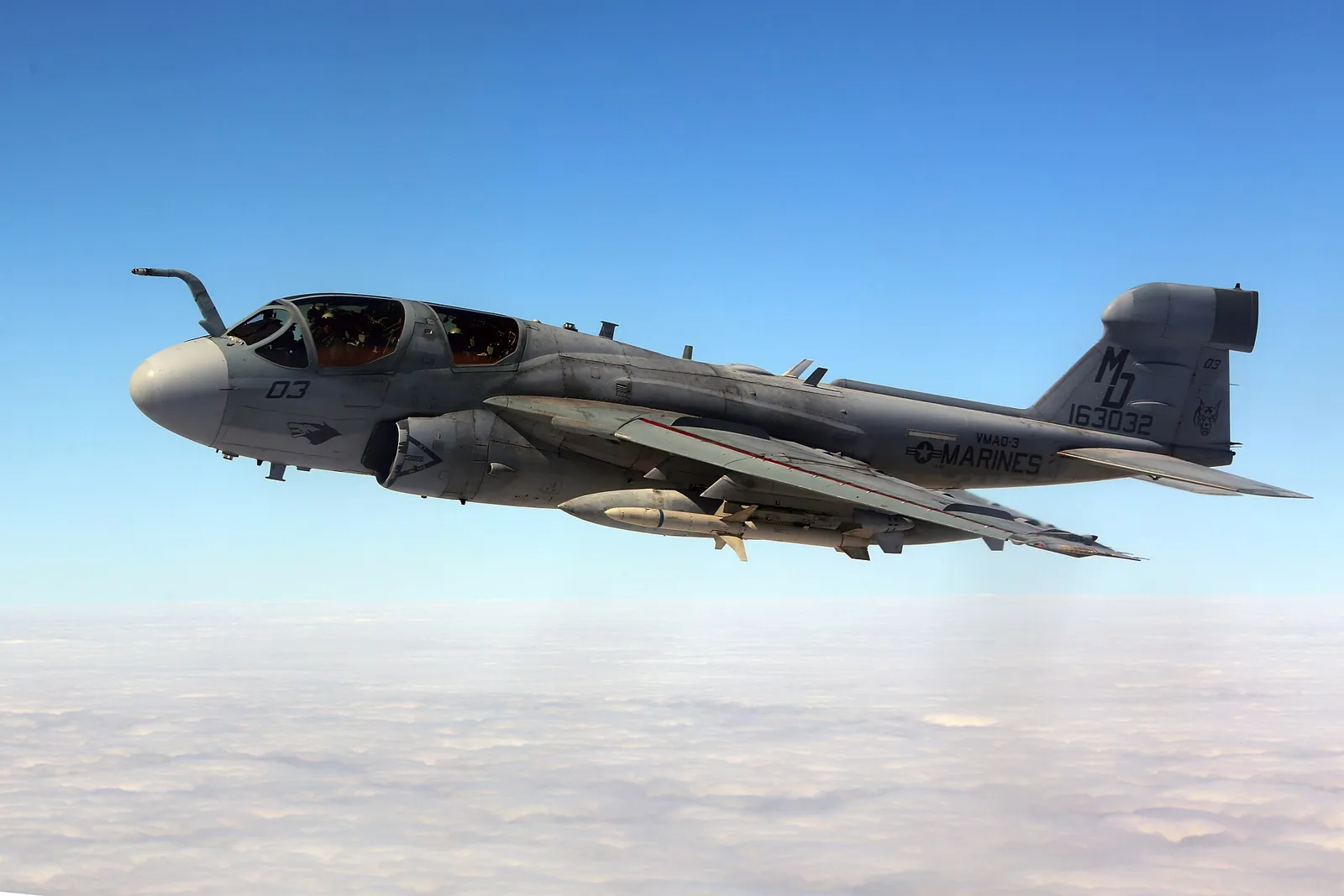
How DoD runs electromagnetic spectrum operations: JP 3-85, the EMS superiority strategy, JEMSO cells, EMBM, service EW units, and GAO's...
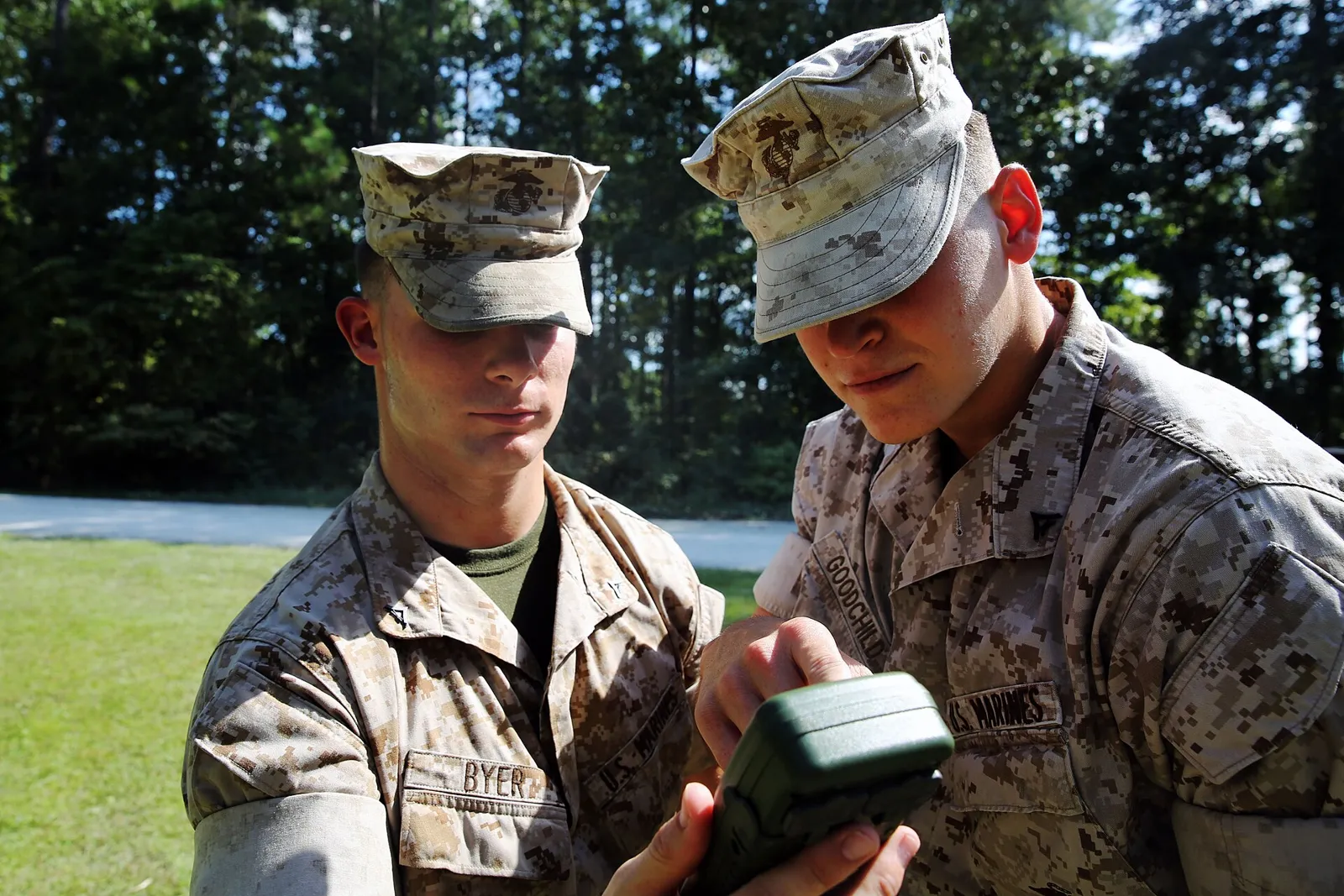
How GNSS jamming, spoofing, and meaconing work, what Ukraine, the Baltic, and the Middle East show, and how militaries, regulators, and engineers...
How DoD is building assured PNT: GPS and M-code status per GAO, Army MAPS and DAPS, LEO PNT, eLoran, magnetic, vision, quantum sensing, and...